
Content creators who lack a definite plan for their work will produce disorganized material, which results in poor search engine performance and lost chances for business expansion. Many businesses publish blogs regularly but struggle to generate consistent traffic because their content lacks connection and strategy. This is where topic clusters become essential.
Topic clusters help organize content around a central subject, which enables search engines to better assess your website's knowledge base. The approach treats all blog content as interconnected material, which establishes expertise in particular topics and enhances total search engine presence.
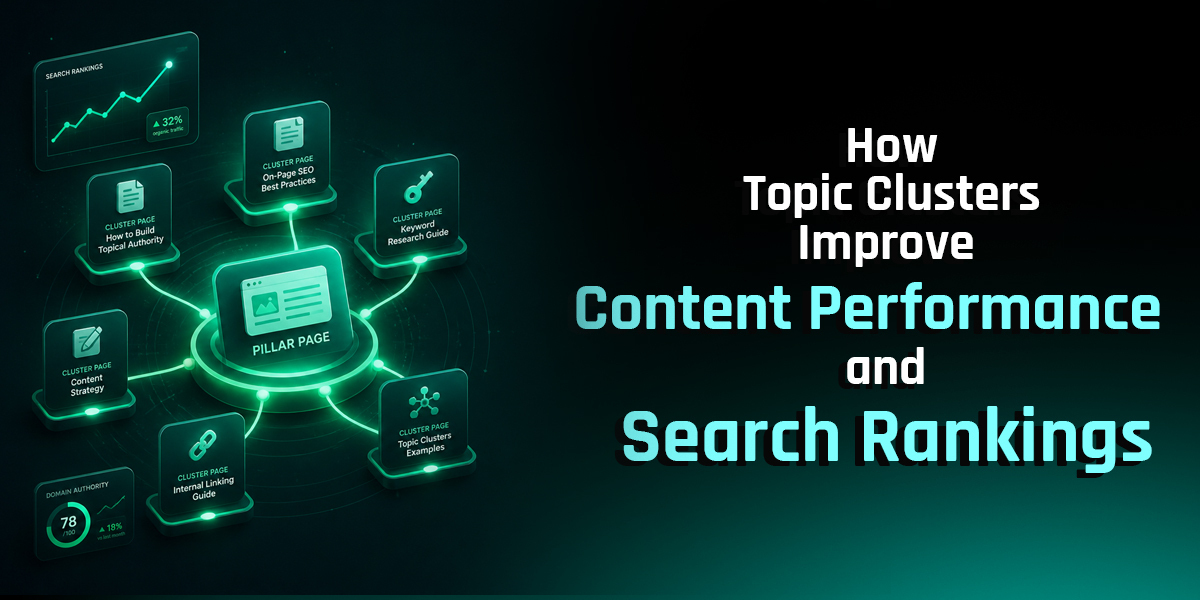
A topic cluster is a content strategy that uses one pillar page to show broad content, which multiple blogs use to show different subtopic details. The internal links of these supporting pages connect back to the main pillar page and to each other in appropriate instances.
If your pillar page focuses on digital marketing services, your supporting blogs can cover SEO content, paid advertising content, content strategy content, website optimization content, and lead generation content. The structure enables users to discover more important information while proving to search engines that your site possesses extensive knowledge about a particular field.
The topic cluster approach establishes a content network that links different pieces of content together instead of creating separate content items.
Search engines give higher rankings to websites that show both authority and relevant content. The search engines gain better understanding of your expertise when you organize your content by related topics, which helps them recognize your website as a trustworthy source.
Page clusters enable web pages to focus on particular search intent while they maintain support for the overall topic. This method enhances keyword relevance while it boosts the probability of achieving rankings in both primary and long-tail search results.
Businesses that want to achieve the same visibility as the top SEO company in Amritsar use topic clusters to enhance their content strategy, which results in better search engine results.
Topic clusters are not only useful for SEO—they also improve user experience. Visitors often arrive at a blog post looking for one answer, but they may need additional information before making a decision.
When related articles are linked naturally, users can continue exploring your website without returning to search results. This increases time on site, reduces bounce rates, and improves engagement.
A strong internal linking structure helps users move smoothly through the customer journey, which is something every digital marketing strategist should prioritize when building a content plan.
One of the biggest mistakes businesses make is creating blog content that drives traffic but does not support conversions. Topic clusters solve this by connecting informational content with service pages and decision-stage content.
For example, an educational blog about SEO basics can link to a service page offering consultation or optimization support. This allows businesses to guide readers from awareness to action more effectively.
Instead of treating blogs and service pages separately, topic clusters create a system where content supports both visibility and lead generation.
Digital marketing tools enable organizations to create and control their topic clusters through better planning and management capabilities. Keyword research platforms help identify search intent and related topics whereas analytics tools demonstrate which content achieves the highest performance.
Businesses can create their content clusters based on actual user needs because these insights provide proof of user demand. Performance tracking identifies content areas that require additional supportive material to address existing deficiencies.The strategic use of tools enables your content plan to function as a data-driven system that achieves your business objectives instead of operating on unpredictable publishing times.
Topic clusters operate as a permanent authority-building system that extends beyond their function as a temporary SEO technique. The search engines evaluate your brand as a trustworthy source for the specific niche after your website publishes additional relevant and valuable content.
The process generates improved rankings that increase over time while simplifying the ranking process for upcoming content. Businesses should focus on developing their core service expertise and understanding customer needs instead of pursuing new keywords.
The combination of consistent content, relevant information, and strategic linking practices establishes online authority, which supports continuous organic traffic growth.
Publishing content without structure leads to short-term results that develop into long-term frustration. Topic clusters provide a smarter way to build authority by connecting blogs and service pages with user intent into one clear strategy.
Your expertise becomes understandable to both search engines and visitors who help improve rankings and user experience and conversion rates. Businesses need topic clusters because they serve as essential tools that help achieve modern SEO success.


© 2023 Copyright damnZgood. All Rights Reserved.




.png)
