
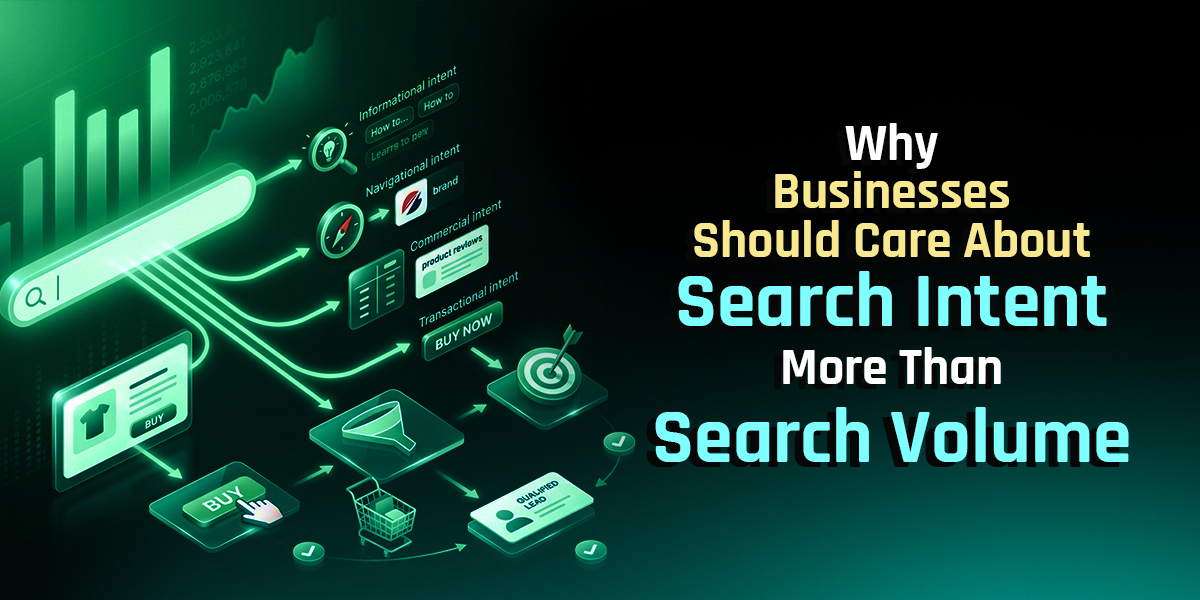
Many businesses begin their SEO strategy by chasing high-volume keywords, assuming that more searches automatically mean more traffic and better results. While search volume is important, it does not always translate into conversions or business growth. A keyword with thousands of monthly searches may attract visitors, but if those users are not looking for what your business offers, the traffic becomes meaningless.
This is where search intent becomes more valuable. Understanding why users are searching helps businesses create content that matches real needs, improves engagement, and drives stronger conversions. Focusing on intent rather than just numbers leads to smarter SEO decisions and long-term success.
Search intent refers to the purpose behind a user’s search query. People search online for different reasons—some want information, some are comparing options, and others are ready to make a purchase.
For example, someone searching “how SEO works” is looking for educational content, while a person searching for a digital marketing company in Amritsar is likely looking for a service provider. These two users are at completely different stages of the customer journey.
Businesses that understand this difference can create more relevant content and connect with users at the right moment, improving both visibility and trust.
High-volume keywords often look attractive because they promise more visibility. However, they are usually highly competitive and may attract broad audiences that are not ready to convert.
For instance, ranking for a general keyword like “marketing” may bring traffic, but much of that traffic may not be relevant to your services. On the other hand, a targeted keyword like seo company in amritsar may have lower volume but stronger commercial intent, making it far more valuable.
Quality traffic matters more than quantity. Businesses should focus on attracting the right visitors rather than simply increasing numbers.
When content aligns with user intent, visitors are more likely to stay on your website and take action. If someone searches for solutions and lands on a page that directly answers their needs, trust increases and conversions become easier.
For businesses offering digital marketing services, intent-focused content helps guide potential customers through the decision-making process. Informational blogs educate users, while service pages support those ready to make inquiries.
This strategic alignment improves not only SEO performance but also lead generation and overall return on investment.
Modern SEO is no longer about repeating exact-match keywords multiple times. Search engines now prioritize relevance, context, and user satisfaction.
Businesses should create content based on what users truly want to know. This means understanding whether a search query is informational, navigational, commercial, or transactional.
For example, a business positioned as the best digital marketing agency in India should create content that addresses customer pain points, explains solutions clearly, and provides trust signals rather than simply targeting broad keywords without purpose.
Intent-driven content performs better because it serves real user needs rather than trying to manipulate rankings.
Search intent is especially important in local SEO because users searching locally often have strong buying intent. Someone searching for nearby services is usually closer to making a decision than someone researching general information.
This makes local keywords more powerful when paired with relevant landing pages and clear service offerings. Businesses that optimize for local intent gain stronger visibility among ready-to-convert audiences.
Understanding how users search within a specific location helps brands compete effectively in local markets and generate more qualified leads.
Search intent creates sustainable SEO success because it focuses on solving problems rather than chasing trends. High-volume keywords may bring temporary traffic spikes, but intent-focused content builds authority and trust over time.
When businesses consistently publish helpful, relevant content, search engines recognize that value. This improves rankings naturally and supports stronger brand positioning.
Instead of asking “How many people search this keyword?” the better question is “What does this user actually want?” That shift creates a stronger foundation for long-term growth.
Search volume can help identify opportunities, but search intent determines whether those opportunities are truly valuable. Businesses that prioritize intent create better content, attract more qualified visitors, and improve conversion rates.
In today’s competitive digital landscape, ranking alone is not enough. Success comes from matching user expectations and delivering the right message at the right time. By focusing on search intent first, businesses build SEO strategies that drive real business results—not just empty traffic.


© 2023 Copyright damnZgood. All Rights Reserved.




.png)
